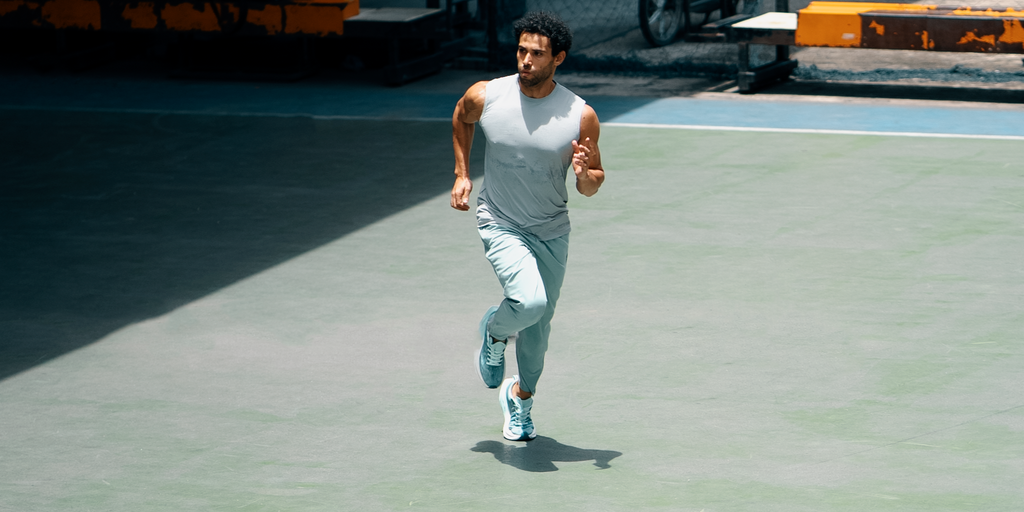
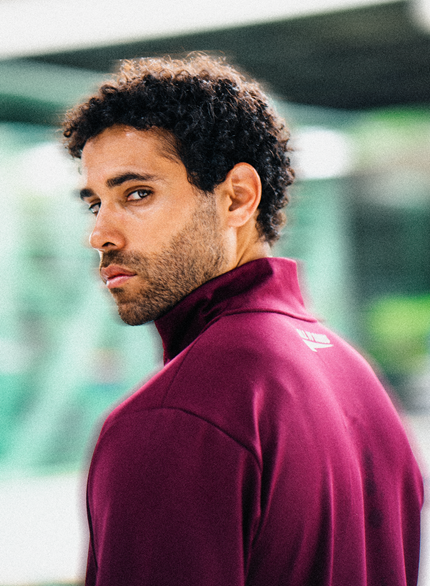
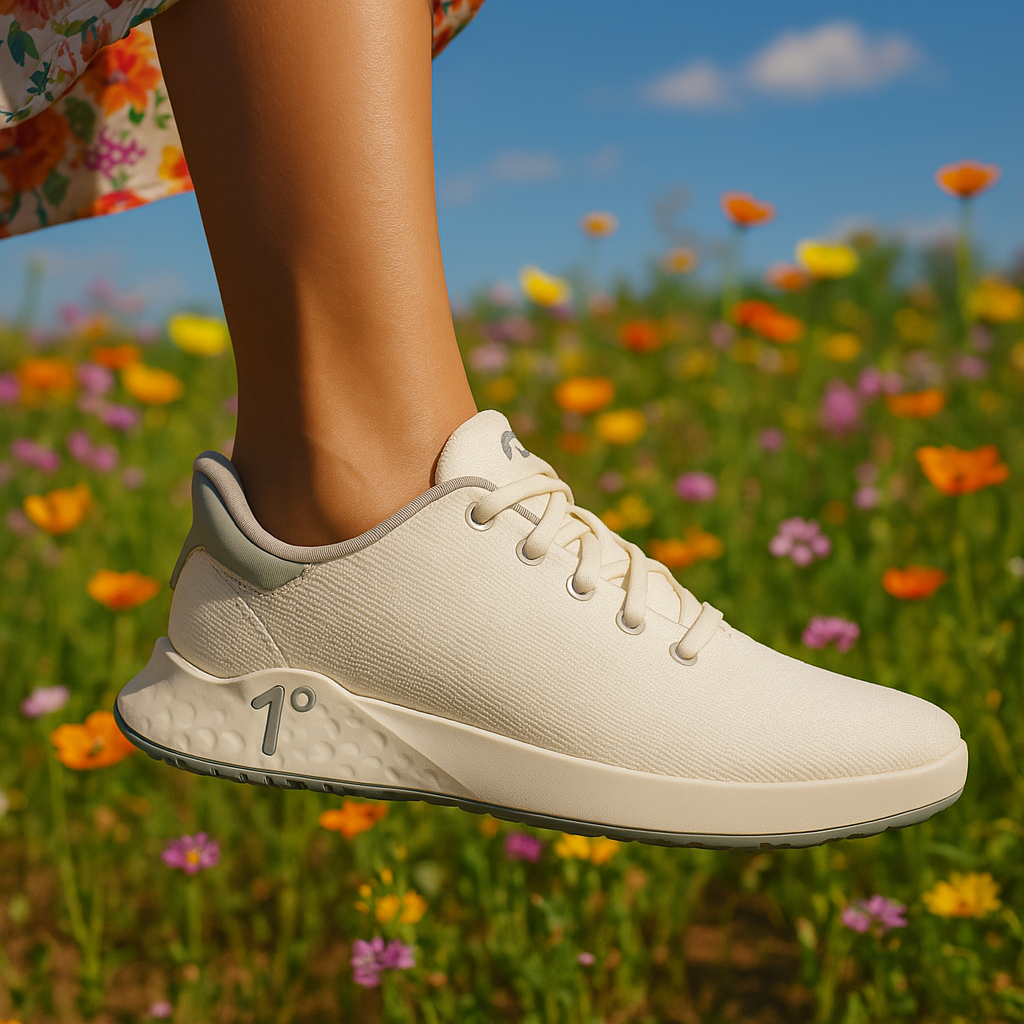


Halfway through a heavy deadlift set, his waistband rolls. Three sets of momentum, gone in three seconds. Across the gym floor, she's mid-rep on a squat when her top rides up, and one hand leaves the bar to fix it. Same problem, different body. This is what poorly engineered men's workout apparel and women's gym apparel actually cost you in output.
The right activewear moves with your training, stays locked under load, and keeps you functional when intensity peaks.
Heavy Lifting & Strength: Built for Range of Motion
Most people don't think about what their clothing demands until it fails mid-set. A heavy squat drops your hips below parallel. A Romanian deadlift stretches your hamstrings close to their limit. Standard fabric doesn't accommodate these positions; it pulls, binds, and eventually gives out at the seams.
Your waistband is doing more work than you realize. During a deadlift, intra-abdominal pressure spikes hard. A wide, elasticated waistband with grip lining keeps you locked in position between reps. That's a performance feature on your gym trousers for men or women.
The upper body has its own demands. During an overhead press, a shirt with low stretch rides up at the waist the moment your arms elevate. Men's workout tees built for lifting need four-way stretch in the fabric itself, not just in the cut. A shoulder seam positioned slightly off the natural shoulder line allows full arm elevation without the collar pulling forward.
One more detail worth knowing: the split hem. That small vertical cut at the base of shorts stops fabric from bunching against the inner thigh during a deep squat. Cheap shorts skip it. You notice the difference in your third working set.
HIIT & High-Cadence Cardio: The Mechanics of Airflow
Sweat is how your body cools itself. When sweat evaporates off your skin, it pulls heat away from your core. Your clothing either supports that process or shuts it down.
Cotton absorbs moisture well until it's saturated. Once that happens during a HIIT session, it traps heat directly against your skin. Core temperature climbs. Effort perception rises. Output drops. The fabric became the problem.
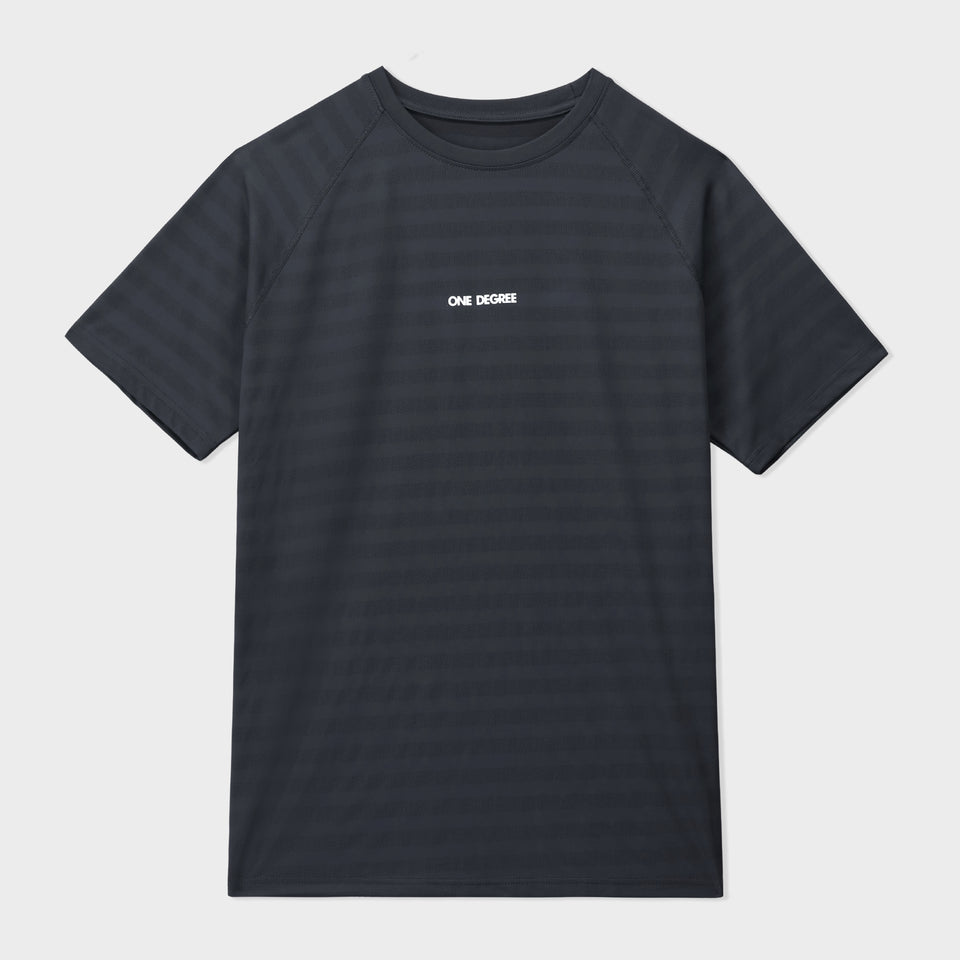
Open-weave constructions work differently. The physical holes in a Jacquard or Grill Mesh weave act as passive ventilation air to move through the fabric rather than getting blocked by it. Men's gym tee shirts built with Dot Mesh or Grill Mesh don't just pull sweat away. They let your body's own cooling system keep working.
This matters more in Pakistan than most brands acknowledge. Outdoor temperatures push past 40°C in summer. Un-air-conditioned gyms add to that. International labels engineer for temperate climates. That's a different problem than the one you're actually training in.
For women in high-intensity sessions, fit is as critical as fabric. Gym t-shirts for women need to stay anchored through box jumps, burpees, and lateral movement, no hem riding up, no neckline shifting. A curved hem cut slightly longer at the back handles this without relying on compression alone.
Men's Gym shorts train in for sprints need a split hem or athletic inseam that keeps fabric clear of the upper thigh during knee drive. Drag at the hip flexor is a real variable during interval work.
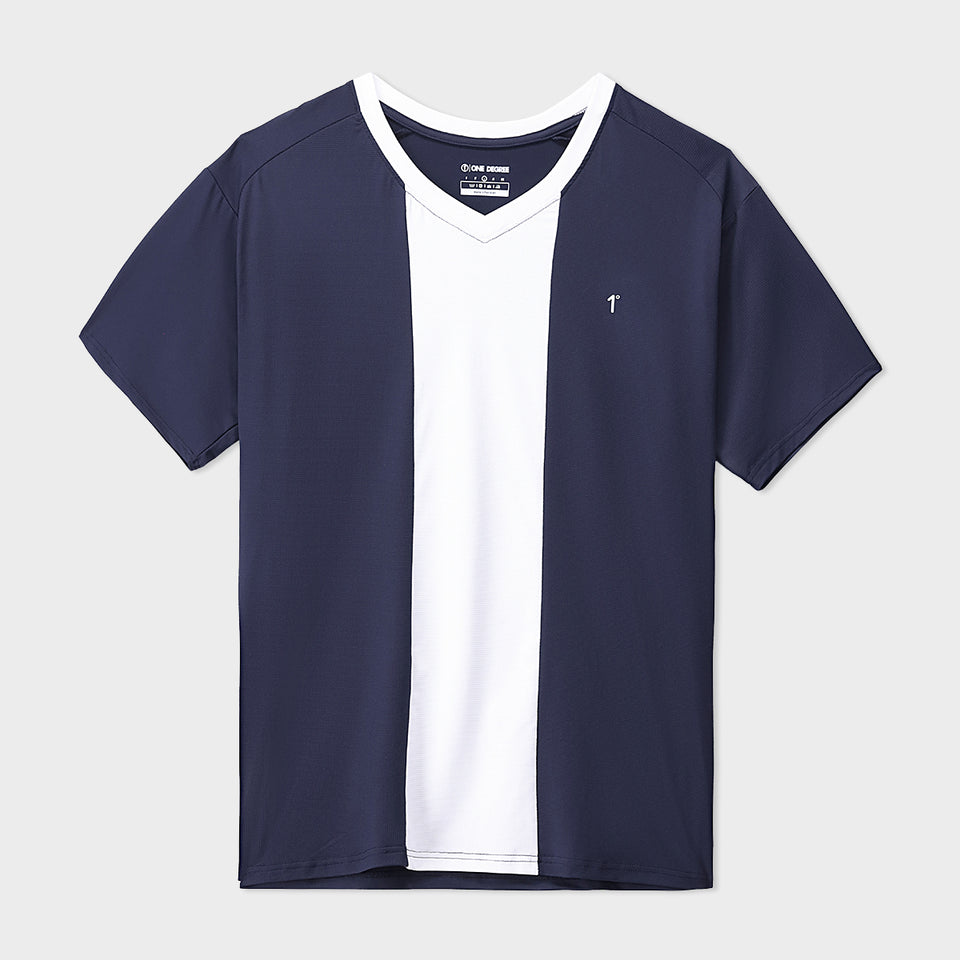
The Fit Matrix: How Construction Changes Performance
How a garment is cut determines how it behaves under load. Same fabric, wrong cut, and the technical properties stop working.
|
Fit Style |
Structural Benefit |
Ideal Application |
|
Form-Fitting / Tapered |
No loose fabric catching on equipment; moves with the body directly |
Pilates, Yoga, Mobility Training |
|
Athletic / Standard Cut |
Shoulder room with a tapered waist; unrestricted during compound lifts |
Weightlifting, General Fitness, gym t-shirt versatility |
|
Open Mesh / Relaxed |
Maximum passive airflow; doesn't cling when saturated |
HIIT, Outdoor Running, High-Cadence Cardio |
A moisture-wicking women's fit t-shirt cut too loosely pools fabric that retains sweat instead of dispersing it. A compression cut too tight restricts blood flow back to the heart, which reduces rather than enhances output. Sports tee shirts built for hybrid training gym floor to padel court to street sit best in the Athletic / Standard Cut. Structured enough to perform. Clean enough to leave in.
Extending the Life of Your Gear: The Synthetic Care Guide
Technical fabric degrades faster from incorrect washing than from training. Three rules cover most of it.
- Cold water only. Heat breaks down elastane fibers, the ones responsible for mechanical stretch and shape retention. One hot wash can cause permanent damage that dozens of cold washes won't reverse.
- No fabric softener. Softeners leave a hydrophobic coating on synthetic fibers that blocks moisture transport. Your best workout tops for women and men will feel softer and wick worse. Skip it entirely.
- Air dry only. Tumble drying distorts open-weave mesh structures at the fabric level. The ventilation holes that regulate airflow change shape under heat and don't recover.
Build Your Training Uniform
Your clothing is not passive equipment. It either works with your training or against it. Get the construction right for your workout type, the fit right for your body, and the care right for the fabric, and the gear stops being something you think about mid-set.
Explore the One Degree collections built for how you train and the climate you're training in.
Frequently Asked Questions
Regular clothes are built for static wear, not dynamic movement. Standard cotton traps sweat against your skin, rapidly raising your core temperature, while rigid seams pull and bind when you try to lift or stretch. We engineer our activewear with mechanical stretch and advanced moisture-wicking technology so you stay cool and completely unrestricted.
Absolutely. Your clothing is a critical piece of equipment. Purpose-built gear actively regulates your body temperature to delay fatigue, while strategic construction, like split hems and four-way stretch, gives you a full, zero-resistance range of motion. When you stop fighting your clothes mid-set, your physical output naturally increases.
For high-cadence cardio, you need maximum airflow and zero fabric drag. We recommend open-weave structures like our Jacquard or Grill Mesh tees. These technical fabrics mechanically pull sweat away from your skin while acting as passive ventilation valves, preventing your gear from clinging to you when saturated.
Focus on fabric physics and cut. You need synthetic blends, like polyester and elastane, for durability and moisture transport. Beyond the fabric, look for structural details: wide waistbands that won't roll during heavy deadlifts, off-center shoulder seams for overhead mobility, and breathable mesh zones for heat dissipation.
Yes, provided you choose versatile, hybrid gear. An athletic-cut sports tee and mid-weight training shorts can easily transition from the treadmill to the weight room floor. However, if you are tackling highly specialized sessions, like max-load squats or long-distance pavement running, we highly recommend matching your gear specifically to the biomechanical demands of that workout.

