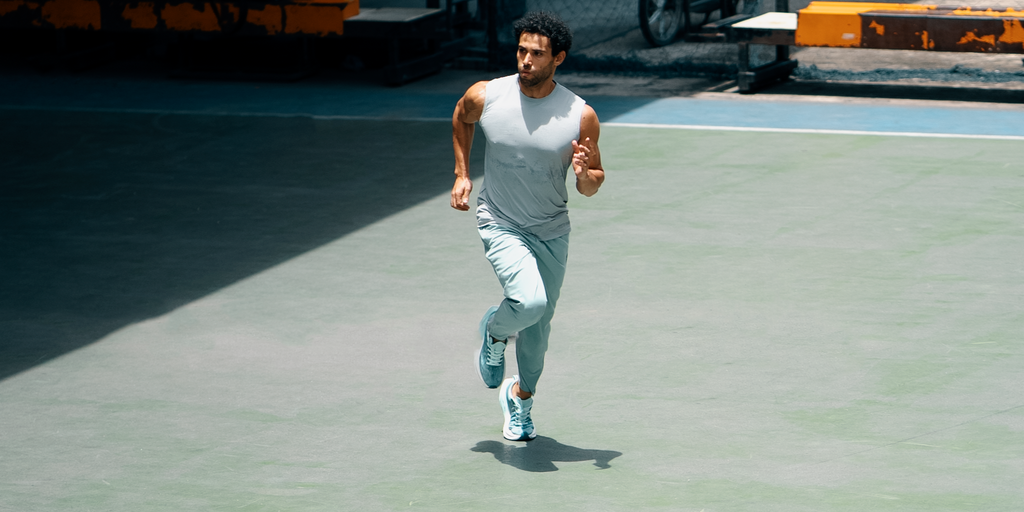


Ask five runners why they bought their current shoes. Most will describe the color, the brand, or how the shoe felt standing still in a store. Almost none will mention sole geometry, energy return, or midsole compression. Those are the things that actually decide whether a shoe holds up at kilometer eight.
Style over structure. That's the gap we're addressing at ONE DEGREE, and it's behind five mistakes that quietly undercut even the best running shoes for men. Here's how we'd fix each one.
Mistake 1: Choosing Aesthetics Over Biomechanics
Plenty of shoes look built for running. Fewer actually are.
When Looking Fast Isn't the Same as Being Built for It
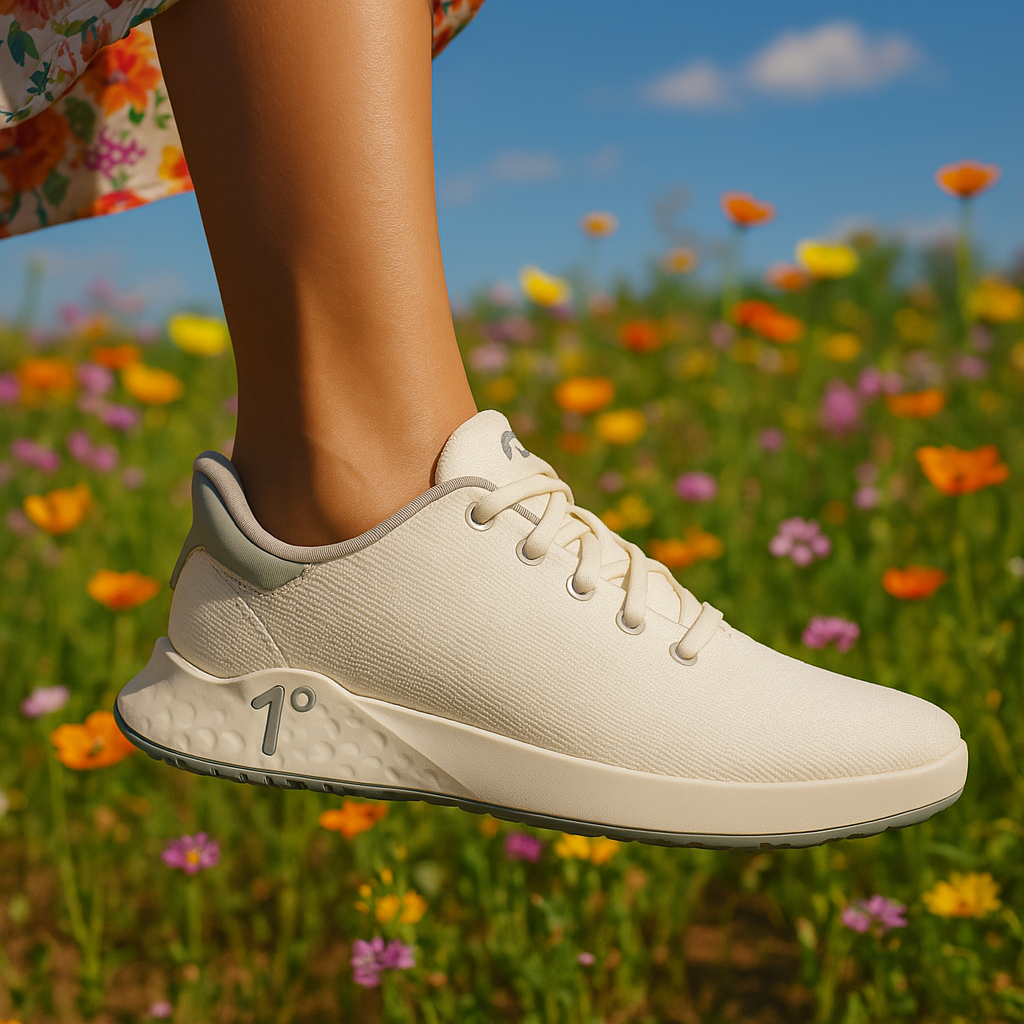
Pulling something like our AEOLUS Motion Shoe 1.0 or Orbit Everyday Sneaker for a 10K is a textbook example. Both are stylish sneakers for men, built for daily wear, light training, and commutes, and they do that job well. Continuous heel-to-toe impact over long distances is a different job entirely, one neither shoe was designed for.
Running shoes need a different foundation. Sole geometry. Cushioning built around forward motion instead of standing comfort. Road mileage is the starting design brief for our Ultrex 360 and Activ8 Performance, not a feature added on top of a lifestyle shoe afterward.

Mistake 2: Confusing "Mushy" with "Supportive"
Softer foam feels like quality in a store. Under real load, on pavement, it's often the opposite: joints doing extra stabilizing work that the shoe should be handling instead.
Why Jogging Shoes for Men Require Energy Return
Compression is only part of what foam needs to do. It also has to give that energy back on the way up, pushing into the next stride rather than swallowing the last one. Skip that part, and the Achilles ends up doing the stabilizing work the foam should have handled.
Energy-return construction protects joints on hard pavement without ever fully bottoming out, the reasoning behind our Zoom Flex and Blast Performance lines. It's also what actually separates comfortable running shoes for men from ones that just feel soft on day one in the store. Look for:
- Foam that springs back to shape quickly after a firm press, rather than staying compressed
- Noticeable rebound underfoot during a short jog test, not just cushioning at standstill
- A midsole that feels structured, not one that collapses evenly under body weight

Mistake 3: Using Your Gym Shoe on the Road
One shoe for the gym floor and the road sounds efficient, right up until the shins disagree.
Distinguishing Between Gym Gear and Running Sneakers for Men
Gym and cross-training shoes prioritize adaptive fit and responsive cushioning for lateral movement, machine work, and quick floor transitions, the design brief behind our Evolve Gym Sneaker series. Road running is a different problem: sustained linear impact, repeated thousands of times over a single run.
Wearing gym-focused sports shoes for men on a high-mileage road run puts stress on a construction that was never built for it. Shin splints tend to show up before the shoe visibly wears out.

Mistake 4: Ignoring the Climate and Foot Expansion
Feet swell during exercise, up to roughly half a size, driven by heat and increased blood flow. A shoe that fits perfectly at 6 am can feel a full size too tight by a hot afternoon run's end. That's not a sizing mistake. It's physiology.
Adapting Sports Shoes in Pakistan for Heat
In Pakistan's climate, that swelling effect happens faster and more sharply than it would somewhere cooler. Breathable construction stops being a comfort feature at that point. It becomes a functional necessity. Engineered mesh uppers that let heat escape matter more here than most buyers realize.
Our Activ8 Performance uses this kind of breathable construction to keep the foot from overheating during longer sessions.
Mistake 5: Assuming a Clean Shoe Is a "Living" Shoe
A shoe's upper can look brand new well after its midsole has stopped doing its job properly. Most runners have no way of telling the difference until something starts to ache.
The Mileage Most Runners Never Track
Performance EVA and TPU midsoles typically hold up for around 500 to 800 kilometers before the foam compresses past the point of real impact absorption. After that, the load that used to get caught by the midsole passes straight into the joints, regardless of how the tread looks.
Better indicators than a clean upper:
- Rough total kilometers logged since the shoe's first run
- Visible compression lines or unevenness across the midsole when viewed from behind
- A noticeable change in how firm or "dead" the cushioning feels compared to when the shoe was new
Match the Shoe to the Mission
Stop settling for one pair doing every job. The fix across all five mistakes is the same: match the shoe to the activity, not the activity to whatever shoe is already on hand.
| Your Goal | Footwear Category | Benchmark Models | Key Benefit |
|---|---|---|---|
| High-mileage road running | Performance Runners | Ultrex 360, Activ8 Performance | Running-specific geometry, breathable uppers |
| Gym work and cross-training | Gym & Training | Evolve Gym Sneaker series | Adaptive fit, responsive cushioning for lateral movement |
| Commuting and casual wear | Lifestyle / Everyday | AEOLUS Motion Shoe 1.0, Orbit Everyday Sneaker | All-day comfort, light movement support |
We built our range around this exact split because engineering one shoe to do every job usually means it does none of them particularly well. Dedicated engineering for each specific job is why we call ONE DEGREE the best sneaker brand in Pakistan. If you're serious about running shoes in Pakistan, it's worth checking which of these five mistakes your current pair is quietly making.
Frequently Asked Questions
Q: Why can the wrong running shoes ruin your workout routine?
A: The wrong shoes disrupt your kinetic chain. Footwear lacking proper energy return or stability forces your muscles and joints (particularly your shins, knees, and lower back) to absorb the harsh impact of every stride. This leads to premature fatigue, injury, and prolonged recovery times that instantly derail a consistent training schedule.
Q: Can I use normal sneakers for running?
A: No. Everyday lifestyle sneakers are engineered for standing comfort and aesthetics, completely lacking the structural shock absorption required for road miles. True running shoes utilize specialized midsole foam and a forward-propulsion sole geometry to safely manage the repetitive, high-impact force of a running stride.
Q: Why do my feet hurt after running?
A: Post-run foot pain typically stems from three specific errors: running in a "dead" shoe where the internal foam has structurally collapsed (usually after 500 kilometers), using flat cross-training shoes on hard pavement, or ignoring foot expansion. Because your feet can swell up to half a size during a hot run, wearing shoes without breathable, engineered mesh uppers will cause pinching, blistering, and arch pain.
Find similar articles:
running shoes in Pakistan sneaker brand in Pakistan sneakers for men sports shoes for menMentioned in this article
More stories

